All Products
 New Arrivals ❤️
 About Us
 Contact Us
 Track order
Climate Change Explained Simply: Causes, Impacts & What You Can Do Today
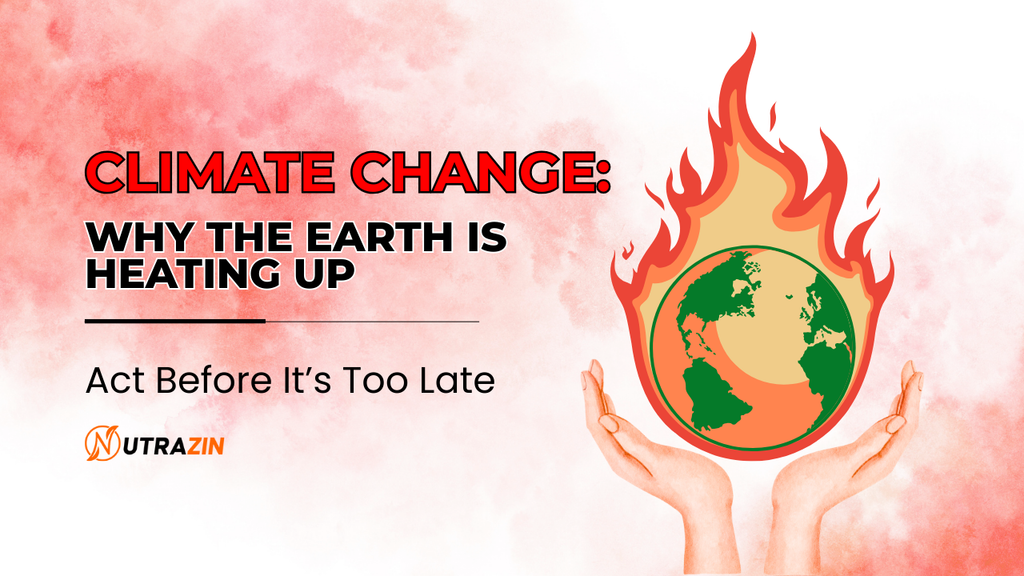
Climate change. We hear about it almost every day – in the news, on social media, from world leaders, and even during random conversations. But many still ask: What does it really mean? Why should I care? And what can I do about it?
If you think the same, you are in the right place. Let’s go through what you need to know about climate change – easily.
What is climate change, really?
Think of Earth as a living organism wrapped in a thin layer of security – our environment. This layer acts as a warm blanket, trapping enough of the sun’s heat to make life possible.
Imagine if we continued to add more and more layers to that blanket. So much heat will indicate that our organism (our planet) will begin to overheat. This is happening today.
In short:
Climate change = long-term changes in the temperature of the Earth and the weather patterns, caused largely by human activities such as burning fossil fuels, cutting trees, and over-consuming natural resources.
Why is It Happening? (Main Causes)

We, humans, are at the centre of this matter. Here are the biggest drivers for climate change:
- Burning fossil fuels → Power plants, Cars, and industry release carbon dioxide (CO₂).
- Deforestation → Fewer trees mean low absorption of CO₂.
- Agriculture and livestock → Cows release methane, which is even more harmful than CO₂.
- Industrial growth → Factories, cement, and plastic release greenhouse gases.
- Lifestyle choices → Fast fashion, excess plastic, and overconsumption are all added.
Together, these activities make our “earth-blanket” very thick, firmly trapping excess heat and disturbing the balance of nature.
How Climate Change Shows Up in Our Lives

It’s not just about “global warming”. Climate change is already shaping the world around us. Here’s how:
- Rising global temperatures → Heat waves become more common and deadly.
- Melting ice & rising seas → Coastal cities are at risk of flooding.
- Extreme weather → Strong cyclones, unexpected monsoon, long droughts.
- Threat to food security → Crops fail when the weather gets very hot or dry.
- Loss of biodiversity → Animals lose their habitats, pushing many species towards extinction.
You have seen the example: Summer feels warm and long, mangoes and seasonal crops are coming at different times, and the rainfall is more uncertain than before. These are climate change in action.
Why Should We Care? (It’s Not Just About Polar Bears)
Many people believe that climate change is “a future problem” or something that just affects wildlife. The truth is that it affects us – here and now.
- Health impacts → Spread diseases such as heat stroke, contaminated air, asthma, and dengue.
- Water scarcity → Melting glaciers = drying rivers. Millions of people may face drinking water shortages.
- Economic costs → Farmers lose crops, floods in cities, and food prices are increasing.
- Human displacement → Rising seas can force millions to leave their coastal houses.
- Future generations → The choices we make today should decide whether our children inherit a safe planet.
Therefore, climate change is not just about the environment – it is about our health, wealth, safety, and existence.
Can we do something about it? (Yes, how?)

It is easy to feel helpless while facing such a big issue, but the truth is that every small action matters. Here are practical steps:
At home
- Switch to LED lights and energy-efficient devices.
- Turn off the devices when not in use – Save both power and bills.
- Reduce water wastage – Fix leaks, use a bucket instead of showers.
In daily life
- Walk, cycle, or use public transport instead of driving everywhere.
- If possible, choose electric or hybrid vehicles.
- Shop mindfully – buy less, choose durable products.
In food choices
- Eat more plant-based foods. (Even one vegetarian day per week helps.)
- Avoid food waste – Store properly, share extra, compost leftovers.
- Support the local farmers’ market instead of imported goods.
For the planet
- Plant trees or support reforestation drives.
- Reduce the use of plastic – carry your own bag, bottle, and cup.
- Support environment-friendly brands and organisations.
Remember: You don’t have to be perfect. Even small, consistent steps create a ripple effect.
The Positive Side: Why There’s Still Hope
It’s not all doom and gloom. All over the world:
- Countries are shifting to renewable energy, such as solar and wind.
- Researchers are creating permanent alternatives for plastic, fuel, and materials.
- More people – especially younger generations – are aware of and taking action.
When billions of people make small choices daily, the effect becomes significant. Think of it as voting: One voice can feel small, but together it changes the result.
Final Thoughts
Climate change is not a “future crisis” – this is now a crisis. But it is a chance for humanity to rethink, reset, and rebuild.
Each of us has a role. The power to work is in everyday decisions: how we eat, travel, act, and live.
So the next time you feel the heat from the burning heat or see the flood on the news, remember – this is not just a random weather. This is a wake-up call. And the best time to work is today.
-
Posted in
climate change, climate change effects, climate crisis, climate education, climate solutions, environmental awareness, global warming, greenhouse gases, renewable energy, sustainability