
Home / Journal / Why Constipation Happens and How Diet Affects It
Why Constipation Happens and How Diet Affects It
By Nutrazin Team
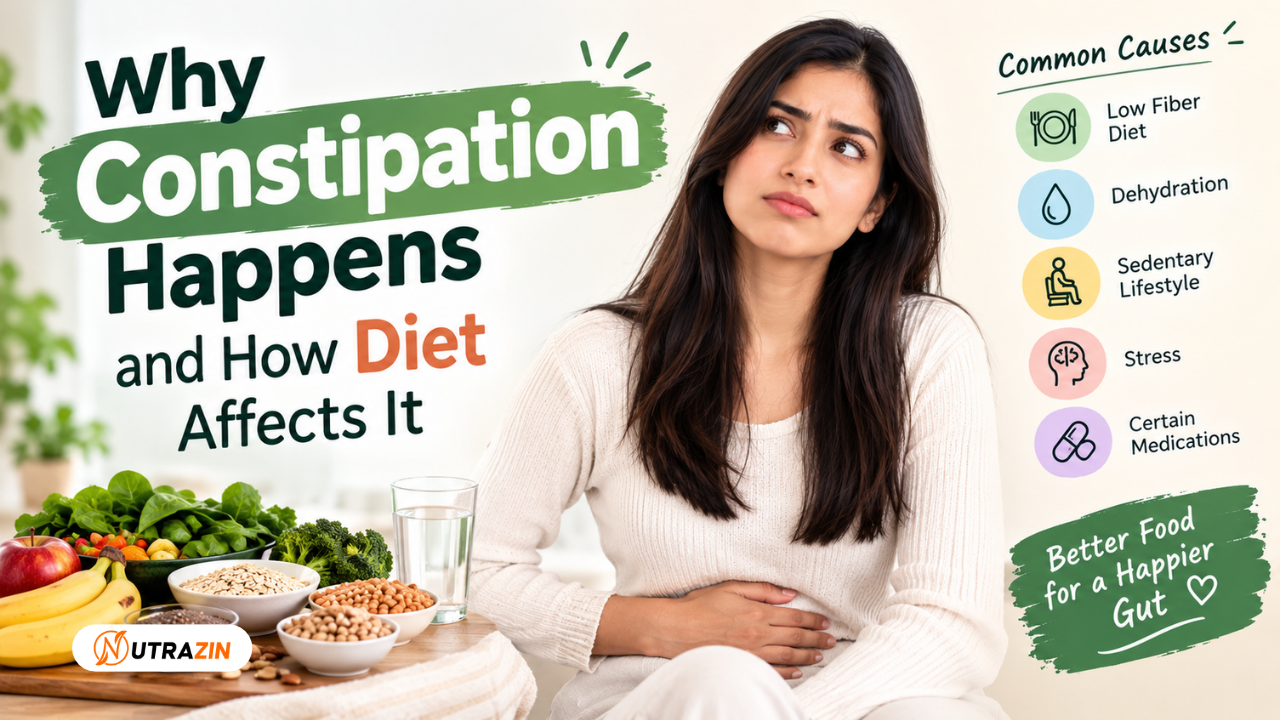
Why Constipation Happens and How Diet Affects It
Do you feel like you need to defecate,
but nothing happens?
Maybe your defecations are rare, your
stool is hard and dry, or you sit on the toilet with a lot of effort.
No need to be alarmed, because constipation
is very common.
It may occur periodically due to
stress, changes in the usual schedule or routine, travel, and even unbalanced
eating. But sometimes people suffer from it permanently, which may negatively
influence their life, comfort, and mood.
And although everyone instantly starts
taking laxatives or "detoxifying drinks," sometimes it can start with
something very simple:
What are you eating, drinking, and
doing every day?
The main functions of our digestive
system depend a lot on our diet and habits. The amount of fiber in your food,
fluid intake, physical activity, meal regularity, and how your body responds to
defecation can affect how your digestive organs work.
But why does constipation happen? How
can your diet influence bowel movements? What is it possible to do about it?
Let's find out.
Why Does Constipation Happen?
It is not always caused by a single
factor.
Constipation could be caused by a mix
of your diet, lifestyle choices, medication, underlying health condition, or
alterations to your routine.
Let us examine some of the major
contributing factors.

1. Your Diet Lacks Sufficient Fiber
This is one of the primary dietary
factors in constipation.
Fiber refers to the elements of plant
food that cannot be fully broken down in the digestive process. It provides
additional bulk to your stool and facilitates defecation.
Natural sources of fibre include the
following foods:
- Fruits
- Vegetables
- Whole grains
- Legumes
- Lentils
- Chickpeas
- Nuts
- Seeds
If your diet consists mainly of highly
processed foods, there is a high chance that you will take in a much lesser
amount of fiber than required by your digestive tract.
For example, a day when you consume
only white bread, biscuits, junk food, refined cereals, fried foods, and
beverages containing lots of sugar will contain much less fiber than a day when
you have consumed vegetables, fruits, legumes, and whole grains.
The main conclusion:
If your diet lacks plant foods, you
might experience some difficulties with your bowel movements.
2. You Are Not Drinking Enough Liquids
Fluid and fiber go hand-in-hand.
Taking more fiber without taking into
consideration the fluids will result in an unexpected outcome.
Liquids help make the stool soft and
easily passed.
Low intake of fluid may lead to hard
stools, especially when coupled with low fiber, sweat, heat, vomiting,
diarrhea, or any other cause of fluid loss.
It doesn't mean that you have to make
yourself drink gallons of fluid.
The amount of liquid required depends
on certain variables such as:
- Body weight
- Heat
- Physical exercise
- Food
- Being pregnant
- Sickness
- Sweat
- And other individual factors
One tip you can adopt is drinking
fluid at regular intervals throughout the day instead of waiting until you
become very thirsty.
3. You Are Not Active Enough
You do not have the digestive system
as an isolated entity of your organism.
Physical exercise may contribute to
the normal work of your digestive system, whereas sitting most of the time can
cause constipation in some people.
There is no need for you to exercise
intensively.
Just move around and get some
exercise:
- Walking
- Cycling
- Stretching
- Domestic chores
- Dancing
- Yoga
- Strength exercises
Even daily walks can be beneficial to
your health and digestion.
4. You Ignore the Call of Nature
This problem is surprisingly frequent.
You have an urge to go to the toilet
while you are working.
You ignore it.
And you are busy then.
And later the urge disappears.
When you frequently postpone your
natural call of nature, your body becomes insensitive to this signal.
That is why it is good to heed the
signal of your body instead of postponing it all the time.
Well, sometimes you cannot use the
toilet right away. It is okay.
What matters is the habitual behavior
of postponing the urge.
5. Changes in Your Schedule May Impact Your
Digestive System
Have you ever experienced any
digestive problems while traveling?
Well, there is a reason for that.
This is because travelling impacts:
- Meal timings
- Eating habits
- Physical activities
- Hydration
- Rest
- Use of the bathroom
Times of stress and irregularities in
your schedule could also have an impact on the way your bowels function.
Sometimes, even a sudden reduction in
the intake of fiber-rich foods can cause changes in your digestion process.
It seems that your gastrointestinal
tract prefers routine and regularity.
6. Some Medications Could Be the Source of
Constipation
Diet is not the only culprit.
There are some medications that can
cause constipation.
Such medications may include:
- Pain killers
- Ferrous sulfate supplements
- Antacids with specific active ingredients
- Antidepressants
- Antihistamines
- Blood pressure medications
- Others
In case of constipation caused by a
certain medication or supplement, do not discontinue the treatment on your own.
Consult your doctor or pharmacist
about the issue.
Perhaps they will advise you to switch
to another medicine or find another way to handle the side effect.
7. Specific Health Problems May Cause
Constipation may be related to a
health problem at times.
Some examples include the following:
- Thyroid disorders
- Neurological diseases
- Metabolic diseases
- Gastrointestinal problems
- Pelvic floor dysfunction
This does not mean that constipation is
an indicator of any dangerous disease.
Many reasons for this condition are
much simpler.
However, constipation that is either
persistent or unusual must be investigated, especially in the case of
additional symptoms.
How Exactly Can Food Affect Constipation?
Everything that you eat goes through
your digestive tract, and whatever remains ends up in your stool.
The nature of your diet can affect the
following things:
Stool mass → stool texture →
frequency of bowel movements → easy passage of stool
Four things in particular can play
an important role:
- Fiber: Provides mass and supports regularity.
- Fluids: Aid in maintaining proper stool texture.
- Quality of overall food intake: Fresh, unprocessed food provides
more fibre and nutrients than refined food.
- Eating schedule: A meal
schedule can help some people establish regularity.
That is why constipation may not be
treated by drinking more fluids.
Your overall diet makes the
difference.
Best Foods to Eat When You Are
Constipated
If your constipation problem is
associated with a lack of fibre, increasing the number of fibre-containing foods may help.
Let's consider some great options.
1. Fruits
Fruits can give you dietary fibre,
water, and beneficial compounds.
Some examples of fruits to consume:
- Apples
- Pears
- Oranges
- Kiwi
- Guava
- Papaya
- Berries
- Plums
- Peaches
When possible, try to consume fruits
whole rather than drink fruit juices since the latter don't contain any fibre.
2. Prunes and Dried Fruits
Prunes are especially famous for
promoting bowel activity.
They contain fiber as well as
naturally occurring sugar alcohols such as sorbitol, which can soften stools in
some individuals.
Besides prunes, there are other dried
fruits containing fibre, like:
- Raisins
- Dried figs
- Dates
- Apricots
3. Vegetables
It's very simple to increase fiber
intake by consuming vegetables.
Consider eating:
- Carrots
- Broccoli
- Spinach
- Peas
- Green beans
- Cauliflower
- Cabbage
- Pumpkin
- Sweet potato
- Okra
Instead of thinking:
"I should eat special
constipation foods."
Try to think about:
"Which foods from my regular diet
could become richer in plant compounds?"
4. Lentils and Dal
This is great for an Indian diet.
Dal is a great source of fiber and
plant protein.
Different types of lentils can be
included in regular food.
Include:
- Moong dal
- Masoor dal
- Toor dal
- Chana dal
- Urad dal
Combine dal with vegetables and whole
grains to have a balanced and fibre-containing diet.
5. Beans and Chickpeas
Rajma, chickpeas, black beans, and
other legumes can serve as good sources of fiber.
They can be incorporated in:
- Curries
- Salads
- Soups
- Wraps
- Bowl preparations
- Homemade snacks
If beans are making you feel bloated,
start in small quantities and increase the amount slowly.
6. Whole Grains
Replacing some refined grains with
whole grains can help you consume more fiber.
Examples include:
- Oats
- Brown rice
- Whole wheat roti
- Barley
- Whole grain bread
- Millets
It is not necessary for you to avoid
white rice and refined grains completely.
All you need is to substitute some
refined grains with better fiber options.
7. Chia Seeds
Chia seeds are high in fibre content
and absorb water, turning into a gel-like substance.
Chia seeds can be added to:
- Yogurt
- Oatmeal
- Smoothies
- Homemade puddings
Since chia seeds absorb water, it is
important to consume them with enough water.
Foods That Could Cause Constipation
No specific food causes constipation
in everyone.
But a diet that consistently has low
amounts of fibre and high amounts of processed foods could increase the risk of
constipation.
Such diets usually have excessive
amounts of:
- Refined grains
- Biscuits
- Cakes
- Pastries
- Fast foods
- Highly processed snacks
- Fried foods
- Sugary beverages
The trouble here is not that one can
never eat such foods.
But the trouble comes from replacing
the fibre-rich foods with these.
Does Drinking Warm Water Help In
Constipation?
Drinking warm water in the morning can
be helpful for those who need to develop a bathroom routine.
Warm water cannot work magically on
constipation.
What works here could be the following
three things combined:
Hydration + routine + gastrocolic
response of the body
As long as it is comfortable and helps
you maintain your routine, it is completely acceptable.
Do not expect warm water to cure
constipation all by itself.
Isabgol or Psyllium Husk
Psyllium husk or isabgol is a form of
soluble fiber.
This can be helpful for certain people
suffering from constipation since it absorbs water and increases stool bulk.
Conclusion
Constipation may be unpleasant,
annoying, and even awkward.
However, constipation is quite common,
and in most cases, minor adjustments in the way one lives may do wonders.