
Home / Journal / How to Improve Gut Health Naturally: 10 Simple Daily Habits
How to Improve Gut Health Naturally: 10 Simple Daily Habits
By Nutrazin Team
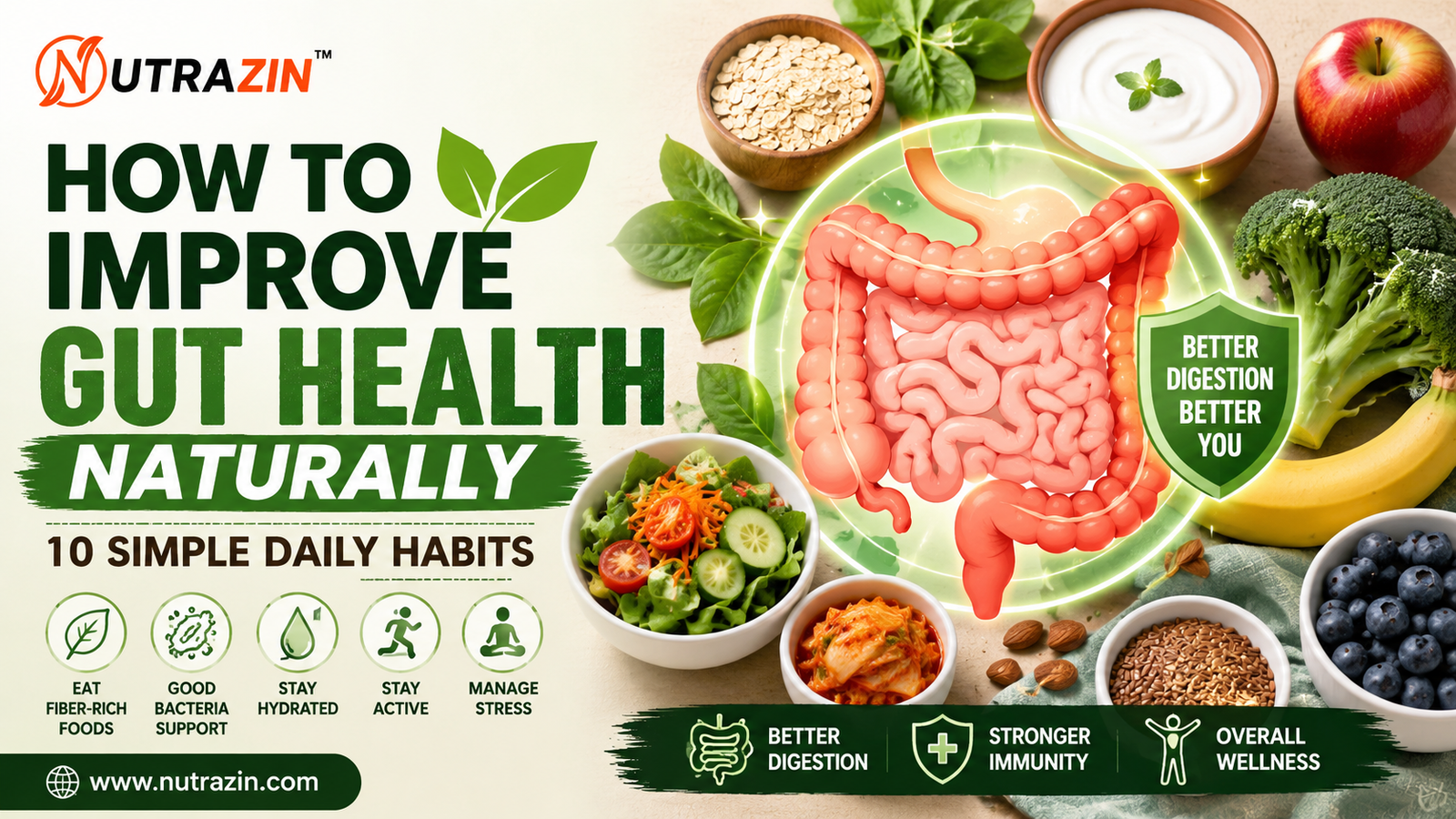
How to Improve Gut Health Naturally: 10 Simple Daily Habits
Your gut plays an important role in your overall health. It helps break down food, absorb nutrients, and supports the body's natural functions. A healthy digestive system also contains a diverse community of microorganisms known as the gut microbiome.
Your daily food choices and lifestyle habits can influence your digestive health. Eating a balanced diet, staying hydrated, getting enough sleep, and maintaining an active lifestyle are some of the simple ways to support your gut.
If you often experience bloating, irregular bowel movements, or digestive discomfort, improving your daily habits may help. Here are 10 practical ways to support better gut health naturally.
1. Eat More Fiber-Rich Foods
Dietary fiber is an important part of a healthy diet. It helps support regular bowel movements and provides nourishment for beneficial gut bacteria.
Include a variety of fiber-rich foods in your daily meals, such as:
- Oats and whole-wheat products
- Apples, bananas, and berries
- Carrots, broccoli, and leafy vegetables
- Lentils, chickpeas, and beans
- Chia seeds, flaxseeds, and almonds
Try adding one fiber-rich food to each meal. Increase your fiber intake gradually to help your digestive system adjust.
2. Include Probiotic Foods in Your Diet
Probiotics are live microorganisms that may provide health benefits when consumed in sufficient amounts. Certain fermented foods contain beneficial microorganisms that can be part of a balanced diet.
Some commonly enjoyed probiotic food sources include:
- Plain yoghurt with live cultures
- Kefir
- Certain fermented vegetables
- Traditional fermented foods
In India, plain curd is a convenient food to include with meals. Choose products with live cultures when available.
Remember that not every fermented food contains live probiotic microorganisms, and the benefits can vary depending on the food and its preparation.
3. Feed Your Gut Bacteria with Prebiotic Foods
Prebiotics are types of dietary fiber that certain gut microorganisms can use as food.
Including prebiotic-rich foods in your diet can help nourish your gut microbiome.
Examples include:
- Onions and garlic
- Bananas
- Oats
- Beans and lentils
- Asparagus
- Whole grains
A varied diet containing different plant foods provides different types of fiber, which can support a diverse gut microbiome.
4. Drink Enough Water
Water plays an important role in digestion. It helps the body process food and supports the movement of stool through the digestive tract.
Not drinking enough fluids may contribute to constipation, especially when your diet is low in fiber.
Make hydration a daily habit:
- Drink water regularly throughout the day.
- Keep a water bottle nearby.
- Drink water with meals.
- Increase fluid intake when exercising or spending time in hot weather.
Your fluid needs may vary depending on your activity level, climate, and individual health.
5. Eat a Variety of Fruits and Vegetables
Different fruits and vegetables provide different nutrients and types of dietary fiber.
Instead of eating the same few foods every day, try adding variety to your meals.
For example, include spinach, carrots, cucumber, seasonal fruits, and other vegetables in your weekly diet.
Eating a wide variety of plant foods can help provide different fibers and nutrients that support gut health.
6. Reduce Highly Processed Foods
Highly processed foods, particularly those that are low in fiber and high in added sugar or unhealthy fats, may contribute to an unbalanced dietary pattern when eaten frequently.
Try to limit:
- Excessively sugary snacks
- Sugary beverages
- Frequent deep-fried foods
- Packaged snacks that are low in fiber
- Meals that contain very little fruit or vegetables
You do not need to eliminate every favourite food. Focus on making balanced food choices more often.
7. Stay Physically Active
Regular physical activity supports general health and may help maintain normal bowel function.
You do not need an intense workout routine to get started.
Simple activities include:
- Walking for 20–30 minutes
- Taking a short walk after meals
- Cycling
- Practising yoga
- Doing light stretching
Choose activities that suit your fitness level and make them part of your daily routine.
8. Maintain a Regular Eating Routine
Your digestive system responds to daily routines. Eating meals at reasonably consistent times may help you develop regular eating and bowel habits.
Try to:
- Eat meals at regular intervals.
- Avoid rushing through meals.
- Chew your food properly.
- Pay attention to hunger and fullness.
- Avoid eating very large meals if they cause discomfort.
A calm and consistent eating routine can make it easier to identify foods that suit your digestive system.
9. Get Enough Sleep and Manage Stress
Your gut and brain communicate through a complex connection called the gut-brain axis.
Stress and poor sleep may affect digestive comfort and bowel habits in some people.
To support your daily wellness:
- Maintain a consistent sleep schedule.
- Aim for adequate sleep each night.
- Practice deep breathing or meditation.
- Spend time outdoors.
- Take breaks from stressful activities.
Managing stress is not a replacement for medical care, but it can be a helpful part of a healthy lifestyle.
10. Make Gut-Friendly Habits Consistent
Improving gut health is not about following a strict diet for a few days. It is about building sustainable habits over time.
Start with small changes:
- Add fruit to your breakfast.
- Include vegetables with lunch and dinner.
- Choose whole grains more often.
- Eat curd or another suitable fermented food.
- Drink water regularly.
- Stay active every day.
Consistency matters more than trying to change everything at once.
A Simple Gut-Friendly Indian Meal Plan
Here is an example of how you can include gut-friendly foods in your daily routine.
Breakfast: Oats with banana, or vegetable poha with a side of fruit.
Mid-morning: A seasonal fruit such as apple, papaya, or orange.
Lunch: Roti or brown rice, dal, cooked vegetables, and plain curd.
Evening snack: A small handful of nuts or roasted chana.
Dinner: Vegetable khichdi, dal with roti, or another balanced meal with vegetables.
This is a general example. Choose foods according to your preferences, tolerance, and individual nutritional needs.
When Should You Pay Attention to Digestive Symptoms?
Occasional digestive discomfort can happen, but persistent symptoms should not be ignored.
Speak with a healthcare professional if you experience:
- Frequent bloating
- Ongoing constipation or diarrhoea
- Severe or recurring abdominal pain
- Blood in your stool
- Unexplained weight loss
- Digestive symptoms that interfere with daily activities
A healthcare professional can help identify the cause and recommend appropriate care.
Final Thoughts
A healthy gut starts with everyday choices. Eating fiber-rich foods, including suitable fermented foods, staying hydrated, exercising regularly, and maintaining a balanced lifestyle can all contribute to digestive wellness.
You do not need complicated routines or extreme diets to begin. Start with one or two simple changes and build healthy habits gradually.
Your gut health is part of your overall wellness journey. Nourish your body with balanced food, stay active, and give your digestive system the care it deserves.