
Home / Journal / How Much Protein Do You Really Need Every Day? A Complete Guide
How Much Protein Do You Really Need Every Day? A Complete Guide
By Team Nutrazin
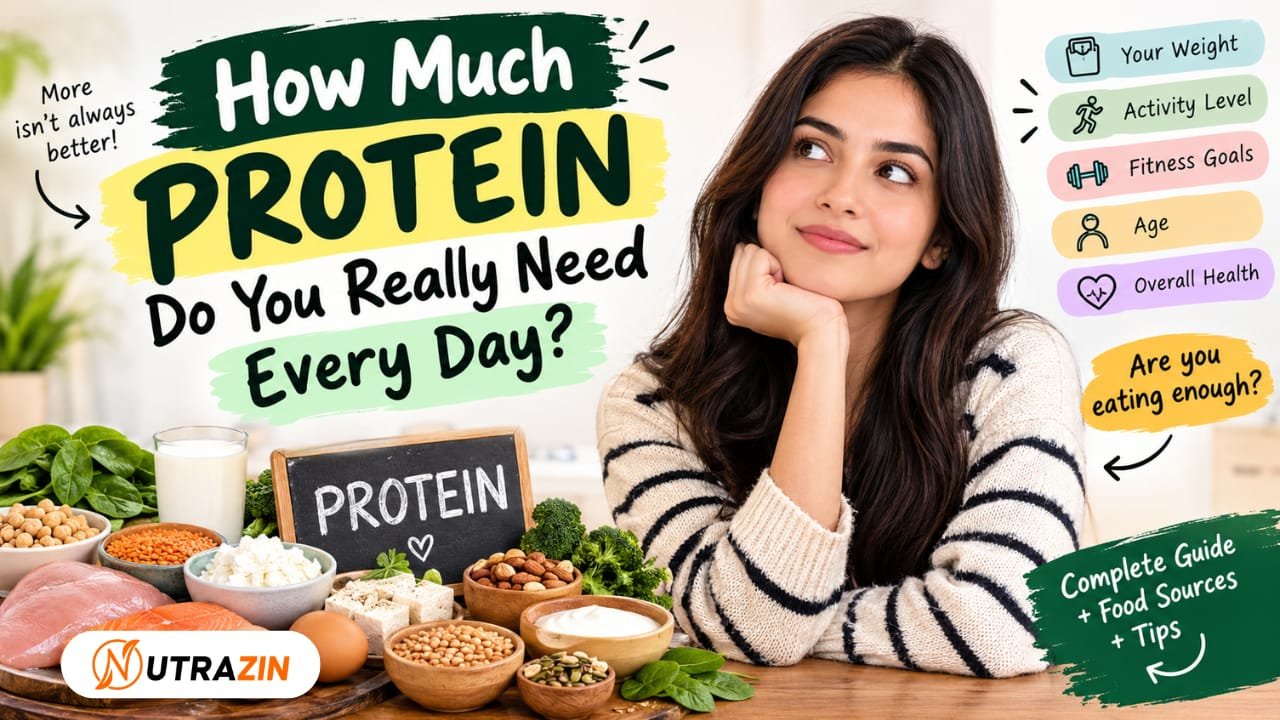
How Much Protein Do You Really Need Every Day?
Protein is an essential nutrient that plays an important role in maintaining muscles, repairing body tissues and supporting everyday body functions. From fitness enthusiasts to people following a regular diet, protein has become an increasingly popular topic.
But an important question remains: How much protein does your body actually need every day?
The answer depends on several factors, including your body weight, age, physical activity and fitness goals. Consuming more protein does not always mean better results. Understanding your individual requirements is the first step towards balanced nutrition.
Why Is Protein Important?
Protein is one of the three major macronutrients, along with carbohydrates and fats. It is made up of amino acids that the body uses for growth, maintenance and repair.
Protein supports several important functions:
- Muscle growth and maintenance.
- Repair of body tissues.
- Production of enzymes and hormones.
- Normal immune system function.
- Maintenance of healthy skin, hair and nails.
- Recovery after physical activity.
Your body needs protein every day, not just when you exercise or go to the gym.
How Much Protein Do You Need Daily?
For generally healthy adults, the commonly used recommended dietary allowance is approximately 0.8 grams of protein per kilogram of body weight per day.
Here are some examples:
| Body Weight | Daily Protein |
|---|---|
| 50 kg | 40 g |
| 55 kg | 44 g |
| 60 kg | 48 g |
| 65 kg | 52 g |
| 70 kg | 56 g |
| 75 kg | 60 g |
| 80 kg | 64 g |
| 90 kg | 72 g |
These figures represent a basic reference requirement. People with higher physical activity levels or specific fitness goals may need more.
Protein Requirements Based on Your Lifestyle
Your protein requirements can vary depending on how active you are.
1. For People With Low Physical Activity
Approximately 0.8 to 1.0 grams per kilogram of body weight daily can be a practical reference range.
For example, a person weighing 60 kg may aim for around 48 to 60 grams per day.
2. For People Who Exercise Regularly
People who exercise regularly may benefit from approximately 1.2 to 1.6 grams per kilogram daily, depending on the intensity and type of exercise.
For a 60 kg individual, this equals approximately 72 to 96 grams per day.
3. For Muscle Growth
For people performing regular resistance training, approximately 1.6 grams per kilogram of body weight daily is a commonly used target.
For example, a person weighing 70 kg may aim for approximately 112 grams of protein daily.
However, muscle development also depends on appropriate training, sufficient energy intake, sleep and recovery. Protein alone cannot build muscle.
4. During Weight Loss
Adequate protein intake can help preserve muscle mass during calorie restriction. It may also improve feelings of fullness after meals.
For people who exercise while managing their weight, approximately 1.2 to 1.6 grams per kilogram daily can be a useful reference range.
5. For Older Adults
Maintaining muscle mass becomes increasingly important with age. Older adults may benefit from approximately 1.0 to 1.2 grams per kilogram daily, depending on their health and activity levels.
Individual requirements can vary, particularly in people with medical conditions.
Best Food Sources of Protein
You do not necessarily need protein supplements to meet your daily requirements. Many everyday foods provide good amounts of protein.
Vegetarian Sources
- Dal and lentils
- Chickpeas and rajma
- Soybeans and tofu
- Paneer
- Milk and yogurt
- Greek yogurt
- Peanuts and almonds
- Seeds and quinoa
Non Vegetarian Sources
- Eggs
- Chicken
- Fish
- Lean meat
- Seafood
- Milk and dairy products
Including a variety of these foods in your meals can help improve your overall protein intake.
Do You Need Protein Powder?
Protein powder is a convenient way to increase protein intake, but it is not essential for everyone.
Whey, casein, soy and pea protein are some commonly available options.
They may be useful when your regular diet does not provide enough protein or when meeting your requirements through meals is difficult.
However, if you already consume sufficient protein through food, additional supplements may not be necessary.
Remember: Protein powder is a supplement, not a replacement for a balanced diet.
Can You Consume Too Much Protein?
Yes. Consuming excessive amounts of protein does not automatically improve muscle growth or overall health.
A balanced diet should also include:
- Carbohydrates for energy.
- Healthy fats.
- Fibre rich foods.
- Fruits and vegetables.
- Essential vitamins and minerals.
- Adequate water.
People with kidney disease or certain medical conditions should consult a healthcare professional before increasing their protein intake significantly.
What Happens When You Do Not Get Enough Protein?
Consistently inadequate protein intake can affect normal body functions and tissue maintenance.
Possible effects include:
- Loss of muscle mass.
- Muscle weakness.
- Poor recovery.
- Impaired wound healing.
- Increased vulnerability to infections.
- Growth and development problems in children.
These symptoms can have several causes, so they should not be used alone to identify protein deficiency.
Final Thoughts
Protein is essential for maintaining muscles, repairing tissues and supporting everyday health. However, eating more protein is not always the answer.
You do not necessarily need a protein shake after every workout or a high protein diet to stay healthy.
Start with simple changes. Include dal, paneer, curd, eggs, beans, milk, fish or other protein rich foods in your daily meals.
Focus on your overall diet, choose a variety of nutritious foods and maintain a consistent lifestyle.
The goal is not to consume the maximum amount of protein. It is to consume the amount your body needs.
Nutrition note: Protein requirements vary between individuals. These values are general dietary references and should not replace personalised advice from a qualified healthcare professional.
https://nutrazin.com/products/high-protein-powder-kesar-badam-pista-200g
